
The Best Places to Visit in Puglia: Top Towns to See, Area by Area (2026)
By Eugenio TommasiUpdated 15 August 2026 13 min read
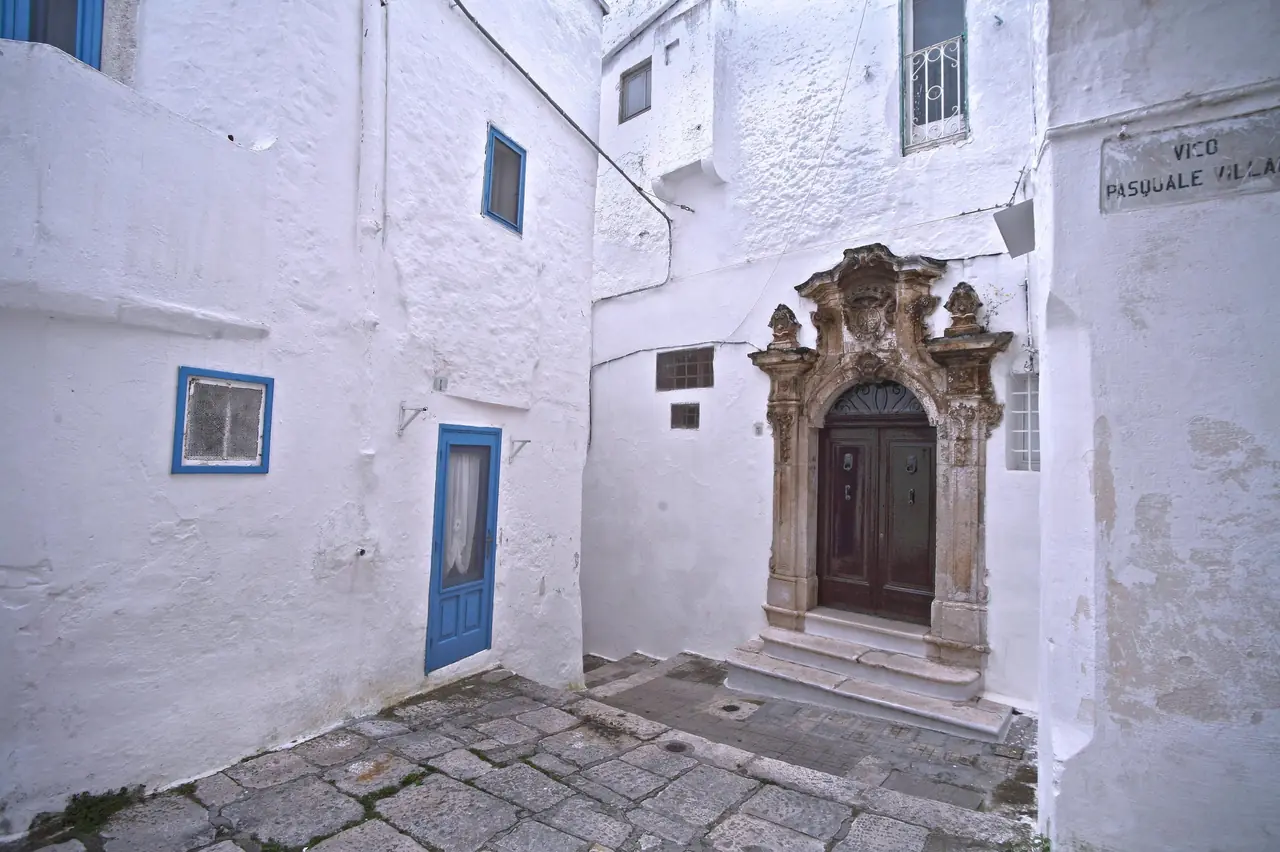
Key facts
- Area
- Best for
- Salento (Lecce, Otranto, Gallipoli, Santa Maria di Leuca)
- Baroque architecture, flat coastline, beaches
- Valle d'Itria (Ostuni, Alberobello, Locorotondo, Martina Franca)
- Whitewashed hill towns, trulli, wine
- Bari & the Adriatic coast (Bari, Polignano a Mare, Monopoli, Trani)
- Clifftop towns, harbours, Romanesque cathedrals
- Gargano (Vieste and around)
- Beaches, sea caves, forested coastline
How to plan which parts of Puglia to see
Puglia isn't one destination, it's four: the flat Salento peninsula in the far south, the hilly white-stone towns of Valle d'Itria in the middle, the string of harbour towns strung along the coast north of Bari, and the wilder, forested Gargano promontory further north still. Most first-time visitors try to cover too much ground and end up seeing towns from a car window rather than on foot. The areas below are ordered south to north, roughly the order most people travel through them, and each one is genuinely walkable — or, if you'd rather cover the distance between towns yourself, rideable by bike, since almost all of them sit within a comfortable day's ride of each other.
We're based in Lecce, in the heart of Salento, so distances below are measured from there unless noted otherwise.
Riding this route on one of our bikes? Start from our bike rental in Puglia — delivery, sizes and prices are all there.
Salento: Lecce, Otranto, Gallipoli and the far south
Salento is the flattest and most compact of the four areas — every town below is within an hour's drive of Lecce, and most are within a comfortable day's bike ride of each other. It's also the only area where you can reach both the Adriatic and the Ionian coast on the same trip.
Lecce
What it is
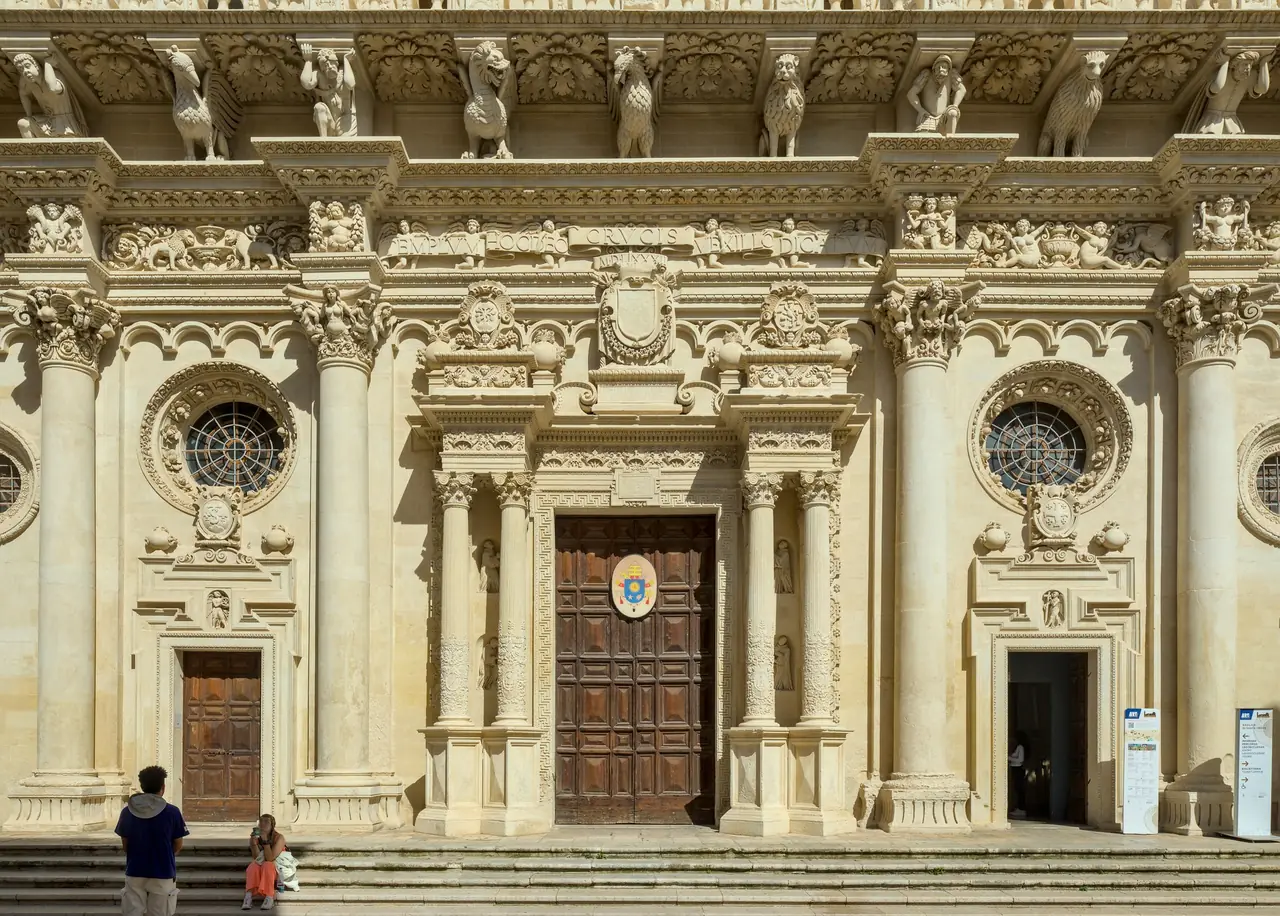
The regional capital of Salento, known as the "Florence of the South" for its dense concentration of 17th-century Baroque architecture carved from soft local limestone. The Basilica di Santa Croce, with its elaborately carved facade, is the single most photographed building in the city. Why it's worth it: A compact, walkable old town where nearly every side street has a carved balcony, a hidden courtyard or a Roman ruin — the amphitheatre in Piazza Sant'Oronzo sits right in the middle of the modern town. Practical: The Basilica di Santa Croce is open daily 9:00-21:00 (visits pause 15 minutes before services); entry is part of the LeccEcclesiae circuit ticket — check current pricing when you book. Getting there: Our base — free bike delivery within the city.
Otranto
What it is
A walled seaside town on Salento's Adriatic tip, built around a medieval castle and an 11th-century cathedral. Why it's worth it: The cathedral's mosaic floor is the reason to come: laid between 1163 and 1165 by the priest Pantaleone, it stretches 52 metres through the nave in a single continuous "Tree of Life" made from over 600,000 tesserae — the only complete Norman-era mosaic floor still preserved in Italy, and it survived the 1480 Ottoman siege that destroyed the church's frescoes. Full details in our guide to Otranto. Practical: Cathedral entry is generally free or low-cost; opening hours vary by season, so confirm before you visit. Getting there: 47 km from Lecce by road, flat the whole way — around 2 hours by bike at a relaxed pace, less on an e-bike.
Gallipoli
What it is
A historic centre built on a small island on Salento's Ionian coast, connected to the mainland by a 17th-century bridge. Why it's worth it: The Castello di Gallipoli, with Byzantine origins layered with later Angevin and Aragonese fortifications, sits partly surrounded by the sea; its terrace gives a full sweep of the harbour. The Fontana Greca at the entrance to the old town is thought to date to the 3rd century BC, reworked in the Renaissance — one of the oldest fountains in Italy. Full details in our guide to Gallipoli. Practical: The castle is open to visitors, with rooms, tunnels and a small museum inside — hours and prices can change, so confirm before you visit. Getting there: 39 km from Lecce, flat — a straightforward bike ride or a short drive. Practical note: Spiaggia della Purità sits directly against the old town walls — the only sandy beach reachable on foot from the historic centre.
Santa Maria di Leuca
What it is
The southernmost point of Salento, where the Adriatic and Ionian seas meet, marked by a lighthouse and a basilica. Why it's worth it: It's less a single sight than a symbolic end-point — many riders and drivers treat it as the natural finish line of a Salento trip, with dramatic limestone cliffs either side of the town. Full details in our guide to Santa Maria di Leuca. Practical: The lighthouse and basilica are viewable from outside at any time; a lighthouse climb, where available, has separate opening hours that can change, so confirm before you visit. Getting there: 70 km from Lecce by road (about 1 hour 20 minutes by car), 48 km from Otranto — the classic way to close a multi-day Salento loop.
Valle d'Itria: the white hill towns
North of Salento, the landscape changes completely: gentle hills, dense olive groves and vineyards, and towns built almost entirely from whitewashed limestone. The towns here sit close together — rarely more than a 30-minute drive apart — which makes it easy to see two or three in a single day.
Ostuni
What it is
"The White City," a hill town whose entire historic centre is whitewashed, visible from several kilometres away across the surrounding olive groves. Why it's worth it: The 15th-century Gothic cathedral has the second-largest rose window in Europe, and the walk up Via Cattedrale from Piazza della Libertà climbs directly to it through the old town. The Arco Scoppa, an elevated stone passageway from the 1700s connecting the Bishop's Palace to the Seminary, opens onto a panoramic view over the olive groves to the Adriatic. Practical: Cathedral entry is free; old town streets are open at all times. Getting there: 77 km from Lecce by road (about 1 hour 5 minutes by car); see bike rental in Ostuni if you're arriving without your own wheels.
Alberobello
What it is
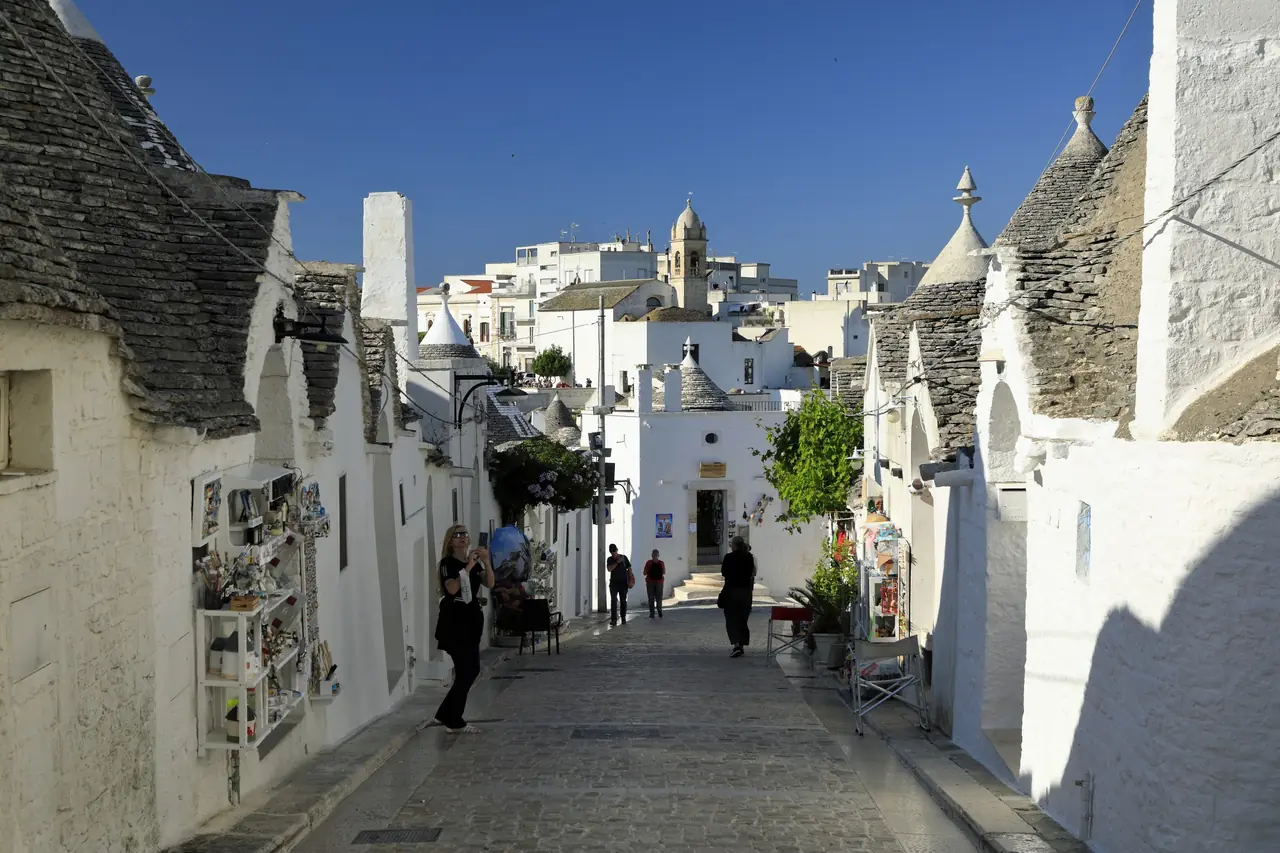
The town of the trulli — whitewashed conical-roofed stone houses unique to this part of Puglia, UNESCO World Heritage-listed since 1996. Why it's worth it: Over a thousand trulli survive in the Rione Monti and Aia Piccola districts. The Trullo Sovrano, the only two-storey trullo in town, is now a house-museum with period furniture showing how these buildings were actually lived in. Practical: Trullo Sovrano is open 10:00-12:45 and 15:30-18:00 (until 18:30 April-October), entry €2.50 — hours and prices can change, so confirm before you visit. Getting there: 9 km from Locorotondo, 35 km from Ostuni — one of the shortest hops in the whole region, flat enough for an easy ride. Practical note: Trulli are concentrated in two adjoining districts, Rione Monti and Aia Piccola, on either side of the main road through town.
Locorotondo
What it is
A hilltop town whose historic centre is famously circular — hence the name — built up from narrow, gable-roofed houses called cummerse, unique to this town. Why it's worth it: The whole old town can be walked in under an hour, with views over the surrounding countryside — a patchwork of vineyards, olive groves and trulli — from almost every street on the ring's outer edge. The 12th-century Chiesa della Madonna della Greca is one of the oldest buildings in town. Full details in our guide to Locorotondo. Practical: Free to walk at any time; wine tastings along the local Valle d'Itria white wine route are widely available in town. Getting there: 9 km from Alberobello, 7 km from Martina Franca — the natural midpoint for exploring this area, whether by car or bike.
Martina Franca
What it is
The largest town in Valle d'Itria, with a well-preserved Baroque centre and a reputation as the area's cultural hub. Why it's worth it: The Basilica di San Martino, an 18th-century Baroque church with an elaborately carved facade, anchors an old town with more than 20 palaces and 15 churches. Piazza Roma, centred on the Palazzo Ducale, is the town's social hub, and every summer the Festival della Valle d'Itria brings open-air opera to the old town. Full details in our guide to Martina Franca. Practical: Old town access is free at all times; the opera festival runs in July-August and needs tickets booked ahead — check current dates when you book. Getting there: 7 km from Locorotondo — the two are often visited together in the same afternoon.
Bari and the Adriatic coast
North of Valle d'Itria, the coast road strings together a run of harbour towns, each built around a historic centre facing the Adriatic. They're well connected by regional train, which makes this the easiest area in Puglia to see without a car.
Bari
What it is
Puglia's regional capital, with a historic centre — Bari Vecchia — built on a dense, Byzantine-era street layout that predates the modern city around it. Why it's worth it: The Basilica di San Nicola, built 1087-1197 after local fishermen brought Saint Nicholas's relics from Turkey, is a major pilgrimage site with a crypt beneath golden mosaics. Piazza Mercantile and Piazza del Ferrarese, both 14th-century squares, are the old town's social centre, and it's still normal to see grandmothers hand-rolling orecchiette on the doorsteps of Via Arco Basso. Practical: The Basilica is free to enter; the crypt has separate, more limited hours that can change, so confirm before you visit. Getting there: 151-161 km from Lecce by road (around 1 hour 50 by car); Bari also has the region's main airport and train hub.
Polignano a Mare
What it is
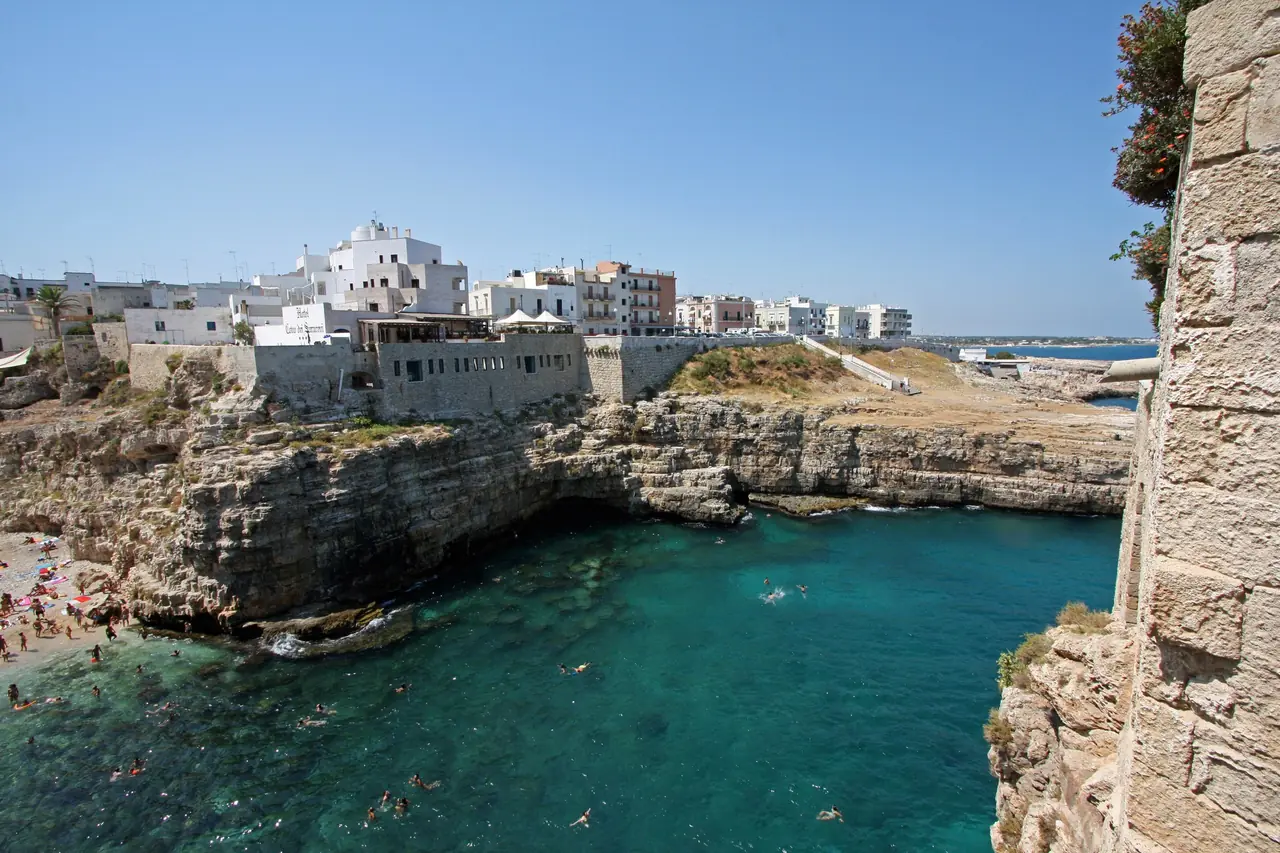
A clifftop town built directly above the Adriatic, with the sea visible from streets throughout the historic centre. Why it's worth it: Lama Monachile, the town's signature beach, sits in a narrow limestone inlet crossed by a Roman-era bridge — one of the most widely photographed spots in Puglia. Grotta Palazzese is a restaurant built into a sea cave since the 1700s, overlooking the water. The Belvedere Santo Stefano is a second viewpoint over Lama Monachile, away from the beach itself. Practical: The old town and viewpoints are free and open at all times; boat tours of the sea caves run seasonally from the harbour — check current availability before you plan around one. Getting there: about 36 km from Bari by road, 33 km on the direct rail line, around 25 minutes by train — one of the easiest day trips in the region without a car. See our full guide to things to do in Polignano a Mare for the old town and viewpoints beyond the beach. Practical note: Beyond Lama Monachile itself, Via Narciso and Viale Domenico Modugno both run along the clifftop with their own sea viewpoints.
Monopoli
What it is
A working fishing port with a historic centre and harbour that the New York Times once named among its 52 best places in the world to visit. Why it's worth it: The Porto Vecchio still functions as a real harbour — fishermen mending nets, boats unloading the day's catch — rather than a preserved-for-tourists version of one. The Cattedrale della Madonna della Madia mixes Romanesque and Baroque styles and holds a legend that a drifting raft carried an icon of the Virgin Mary into the harbour in 1117; wood from the raft was reportedly used to finish the cathedral roof. Full details in our guide to Monopoli. Practical: Old town and harbour are free to walk; the Castle of Charles V has separate, limited opening hours that can change, so confirm before you visit. Getting there: 13 km by road from Polignano a Mare (8.3 km in a straight line, 5 minutes by train) — easily combined in the same day.
Trani
What it is
A port town further north along the coast, built around one of the most dramatically sited cathedrals in southern Italy. Why it's worth it: The Cattedrale di San Nicola Pellegrino, built 1097-1197 in pale Romanesque limestone, stands directly on the Adriatic waterfront with the sea on three sides and no promenade or road between the church and the water — a setting almost nowhere else in Puglia matches. Its bronze doors, cast by the local sculptor Barisano da Trani in 1175, are original. Full details, including the Castello Svevo and the Sinagoga Scolanova, in our guide to things to do in Trani. Practical: The crypt of St Nicholas the Pilgrim is open to the public; hours vary seasonally, so confirm before you visit. Getting there: Furthest north of the towns in this section — allow it as a separate half-day rather than combining it with Bari, Polignano and Monopoli in one trip.
Gargano: Puglia's wildest coastline
The Gargano promontory, in Puglia's far north, is a different region entirely — forested, hilly, and edged with limestone cliffs and sea caves rather than the flat coastline further south.
Vieste
What it is
The main town of the Gargano, built on a headland between two long stretches of beach, with an 11th-century cathedral and a 13th-century castle in its old town. Why it's worth it: Pizzomunno beach, a 3 km stretch of golden sand named for the tall white sea stack in front of it, is shallow and family-friendly; boat trips along the coast reach Baia delle Zagare's dramatic rock stacks and sea caves you can't get to on foot. The Chiesa di San Francesco, an old monastery on the southern peninsula, looks out toward Croatia. Full details in our guide to Vieste. Practical: Old town and beaches are free and open at all times; boat tours run seasonally from the harbour — check current availability before you plan around one. Getting there: Furthest of all the areas in this guide — allow at least a full day of travel time from Salento, and plan Gargano as its own 2-3 day leg rather than a day trip. Practical note: Constant wind on the north coast makes Vieste a popular windsurfing and kitesurfing spot, if you'd rather be on the water than the sand.
Worth a day trip: Matera
Matera isn't in Puglia — it's just across the regional border in Basilicata — but it's close enough to Valle d'Itria and Bari that most visitors combine it with a Puglia trip anyway. Its sassi, cave dwellings carved into the rock and inhabited for thousands of years, are UNESCO-listed and unlike anything else in southern Italy. It's 68 km (about 1 hour 25) from Alberobello and about 70 km (1 hour 5 minutes) from Bari by car, which makes it a realistic single-day add-on to a Valle d'Itria itinerary. See our Matera day trip guide for a route that starts and ends in Puglia.
Seeing Puglia's towns by bike
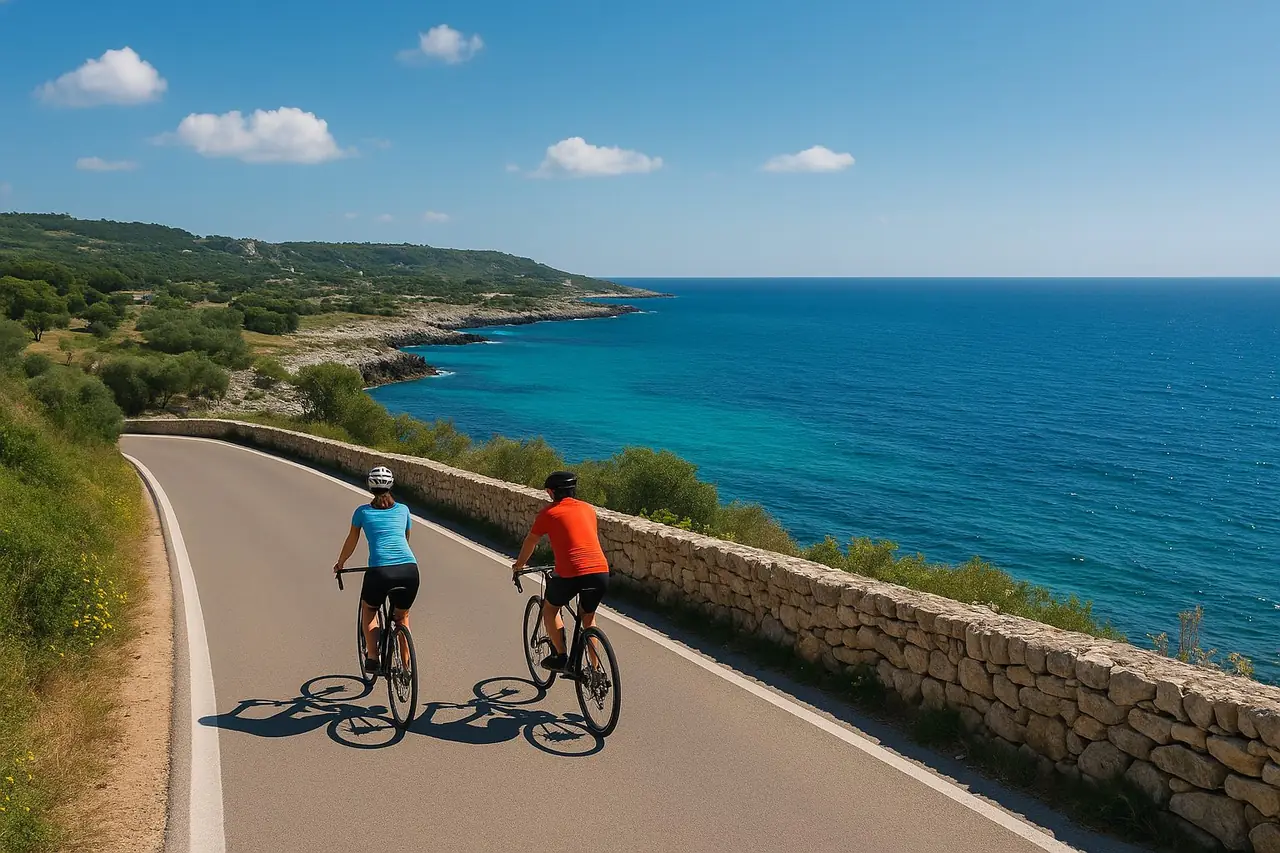
Because the towns in Valle d'Itria sit so close together, it's one of the few places in Puglia where you can genuinely link three or four of them on two wheels in a single day rather than driving between them. A loop from Locorotondo — Locorotondo to Alberobello (9 km), on to Martina Franca via the connecting country road (roughly 15 km), then back to Locorotondo (7 km) — covers about 31 km (19 miles) total on mostly flat terrain with a couple of short rises, almost entirely on quiet, shaded secondary roads through olive groves and vineyards. Refill water bottles in the main piazza of each town; there's little between them. Total elevation gain over the full loop comes to around 251 m — gentle enough that the "couple of short rises" is an accurate description, not an understatement.
Rent the right bike for this kind of route — road or gravel both handle it fine — through bike rental in Valle d'Itria, with delivery to your accommodation in any of the four towns.
How many days do you need in Puglia?
| Trip length | What you can realistically cover |
|---|---|
| 3-4 days | Salento only: Lecce as a base, day trips to Otranto and Gallipoli |
| 5-7 days | Salento + Valle d'Itria: the combination most first-time visitors choose |
| 8-10 days | Salento + Valle d'Itria + Bari's coast, with a Matera day trip added |
| 12+ days | All of the above plus Gargano as a separate leg in the north |
Salento and Valle d'Itria pair well because they're close (77-112 km apart) and very different in character — flat coastline versus hill towns. Gargano is the odd one out geographically; treat it as its own trip, or a dedicated extension, rather than trying to fit it into a single loop with the south.
FAQ
How many days do I need to see the best of Puglia? At least 5-7 days to properly cover Salento and Valle d'Itria, the two areas closest together. Add 2-3 more days for Bari's coast, and treat Gargano as a separate trip if you want to include it.
What is the most beautiful town in Puglia? It depends what you're after: Lecce for Baroque architecture, Alberobello for the trulli, Ostuni for the whitewashed hill-town views, or Polignano a Mare for the clifftop setting. Most visitors pick a favourite only after seeing at least three or four.
Is Bari or Lecce a better base for exploring Puglia? Lecce is better placed for Salento (Otranto, Gallipoli, Santa Maria di Leuca); Bari is better for Valle d'Itria and the Adriatic coast towns, and has the region's main airport. Many trips use both, one after the other.
Can I visit Puglia's top towns without a car? Yes for the Bari coast — Bari, Polignano a Mare, Monopoli and Trani are all linked by frequent regional trains. Salento and Valle d'Itria are more manageable by rental bike or car, since public transport between towns is less frequent.
What's the best time of year to visit Puglia's towns? April-June and September-October offer the mildest weather and the fewest crowds. July-August is hot and busy, especially in Polignano a Mare and Alberobello; November-March is quiet but some seasonal attractions reduce their hours.
Is Matera in Puglia? No, Matera is in the neighbouring region of Basilicata, but it's close enough to Valle d'Itria (about 1 hour 25 from Alberobello) that most Puglia itineraries include it as a day trip.
Plan your route between towns : whether you're linking Valle d'Itria's hill towns by bike or need a bike delivered to your base in Lecce for Salento day trips, tell us your itinerary and we'll match you to the right rental or tour.